


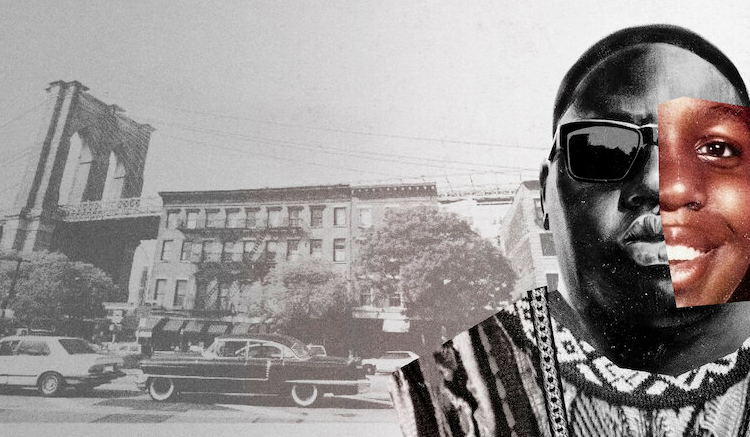
As a proper stoner, you are bound to be a hip hop fan, and if we are talking hip hop you will know Notorious B.I.G., one of the greats in the history of the genre. We had already seen documentaries about Big Poppa, but this is the only one approved directly by Voletta Wallace, the artist's mother, and it is a genuine visual gem. Now that we have watched it, here is our review of the best and the worst.
The best and the worst of “Biggie: I Got a Story to Tell”
The fact that his mother and his former manager (today the administrator of his estate) signed off on the release tells you just how special and intimate the whole piece is. His manager, Barrow, told Rolling Stone that the idea came out of a conversation with Mama Wallace to make the first documentary about BIG authorised by the people around him, with the aim of getting inside Christopher Wallace's head and into the influences that, from a young age, fed his creativity and his unmistakable wordplay.

In this Netflix gem you are going to find unseen footage shot by Christopher Wallace's best friend, Damion "D-Roc" Butler, plus interviews with his family and his closest friends. Of all the documentaries we have seen about Notorious B.I.G., this one shows a side of Biggie Smalls that the world barely knew. It is filmed between Fulton Street (the legendary NY street where he grew up) and Trelawny, Jamaica, where his mother comes from, and it tells the story of his origins with a very intimate feel.
The best
1) The unseen footage. The recordings are the work of Damion Butler, one of his lifelong friends, who documented private moments in hotels, cars and on the street, before, during and after the shows. More than 20 years on from his early death, watching that material really hits you.

2) The range of interviews with the people closest to him: everybody who mattered in his life shows up, and that makes the story feel more complete.
3) His origins and his childhood, properly explained: we had never seen footage of his grandmother or of Trelawny, the Jamaican town Biggie visited every summer. He came back from those Caribbean trips soaked in country, reggae and funk, sounds that helped him develop his producer's ear.
The worst
1) The chronology. Unlike other Netflix rap documentaries such as Hip Hop Evolution, we missed a more defined sense of time order: it jumps around and you lose the thread a little between his teenage years and his death.

2) It does not dig into the trouble with Tupac or clear up why they went from being good friends to falling out. It is not the only documentary about Biggie (there are two more), and we have watched those as well so we could give you the best review.

“I Got a Story to Tell” vs Unsolved (2018)
We like it because it digs deeper into the causes of both deaths and follows a solid timeline. We do not like that it is not verified by people close to either rapper and that it has a more sensationalist edge.

“I Got a Story to Tell” vs Biggie and Tupac (2002)
We like the impact it had when it came out, because thanks to it the investigation into Biggie's death was reopened eight years later. We do not like that it feels more fictionalised and less like a truthful documentary.
We have already devoured the documentary a couple of times, and there is footage in there worth framing. We came out with 3 good things and 2 bad ones, and we reckon you should watch it.
You might also like Netflix and Joints: Cannabis Documentaries and Series and 5 Places to Eat Munchies in Madrid
